Practice smarter. Grow faster.
Written answers · Scored 0–100 · Android first
The rubric does not change month to month.
You write the answer first. Then it is scored 0 to 100 against key points a person wrote by hand, and filed before you arrived.
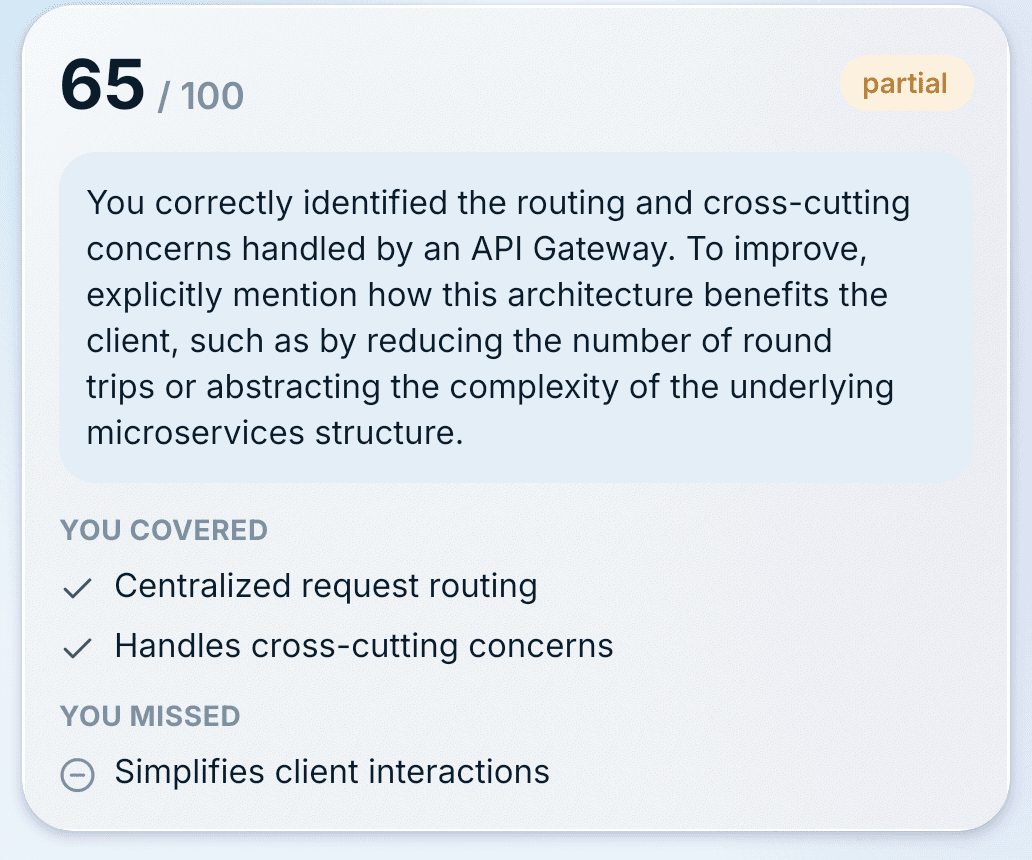
Plate 01 — a real answer, scored 65
What a chat window cannot do
It can answer any interview question, and it answers better every month. It cannot remember what you got wrong in March. It cannot grade you the same way it grades everyone else, because there is no fixed thing it is grading against.
A Practivia score is reproducible. The rubric is written by hand and it stays put, which is what makes one score comparable to another: across your own months, and across everyone else sitting the same question.
Figure A — three cohorts of answers, written months apart, resolving onto one fixed set of key points. The lattice is the rubric. It does not move.
How an answer gets scored
Four things happen, in this order, every time. None of them changes because the model behind it changed.
You write before you read
The model answer stays locked until you submit yours. There is no path through the product where you skim the good answer first and then convince yourself you knew it.
Scored 0 to 100
Against the key points curated for that specific question, and against the mistakes candidates commonly make on it. Both were written by hand and stored in the database before you got there.
You get the breakdown, not just the number
Which key points you covered. Which ones you missed. Any factual errors in what you wrote. Then one line of coaching, and nothing more than one line.
Fluency is not rewarded
A confident, well organised answer that misses the key points scores low. That is deliberate. Interviews are lost on substance far more often than on delivery.
Built from your resume and the job description
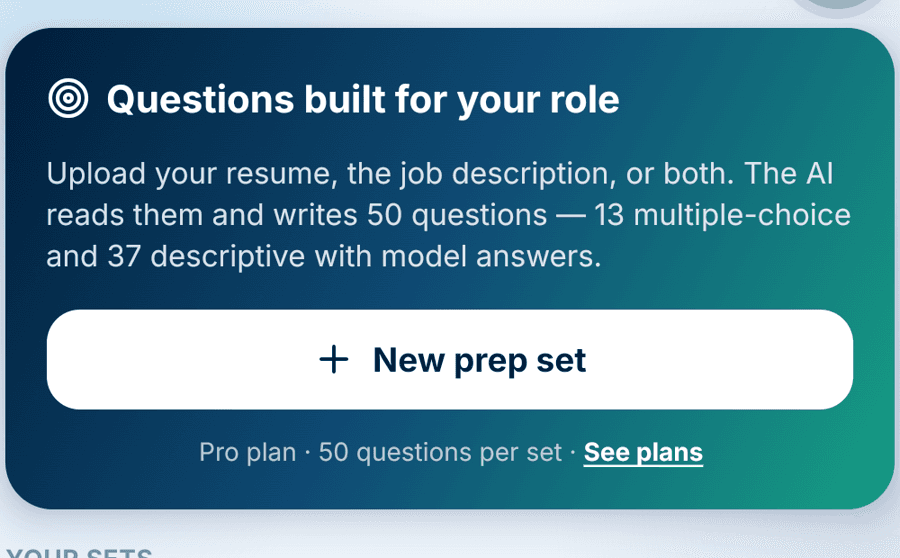
Upload a resume, a job description, or both. Two passes run over what you gave it, and each one leaves something behind.
Pass 1
The brief
A first read produces focus areas with weights, what the job description actually demands, what your resume actually evidences, and the gaps between those two lists.
Pass 2
The question set
A second pass writes the questions from that brief. Nothing is drawn from a generic pool, and every question keeps a pointer back to what provoked it.
- Questions per set, by tier
- 15 / 50 / 100
- Multiple choice
- ~25%
Own the migration of our monolith order service onto event driven consumers.
Walk through moving a synchronous order flow onto a queue without losing ordering guarantees. What breaks first, and how would you know?
Descriptive · Written answer · Graded
For the days you have twenty minutes
Daily
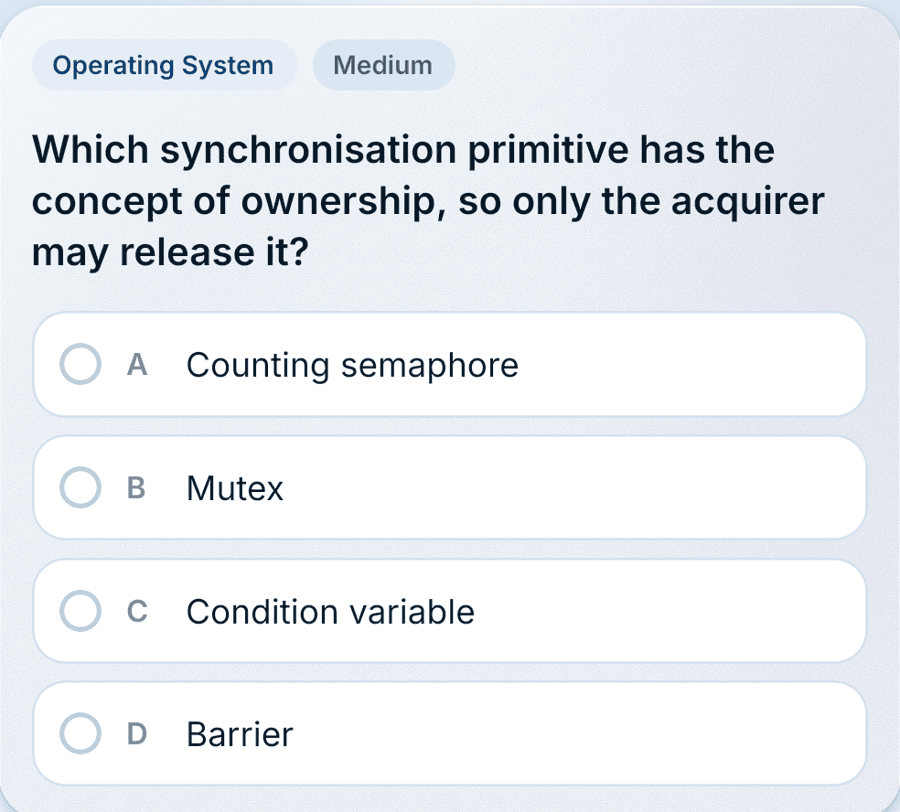
One multiple choice question a day
The same question for everyone, every day. It takes a minute, and it is the cheapest way to keep the habit alive between prep sets.
A streak
It breaks when you skip a day. That is the entire mechanic, and it is the only pressure the app applies.
XP
Earned for answering and for getting graded, so it tracks work done rather than time spent in the app.
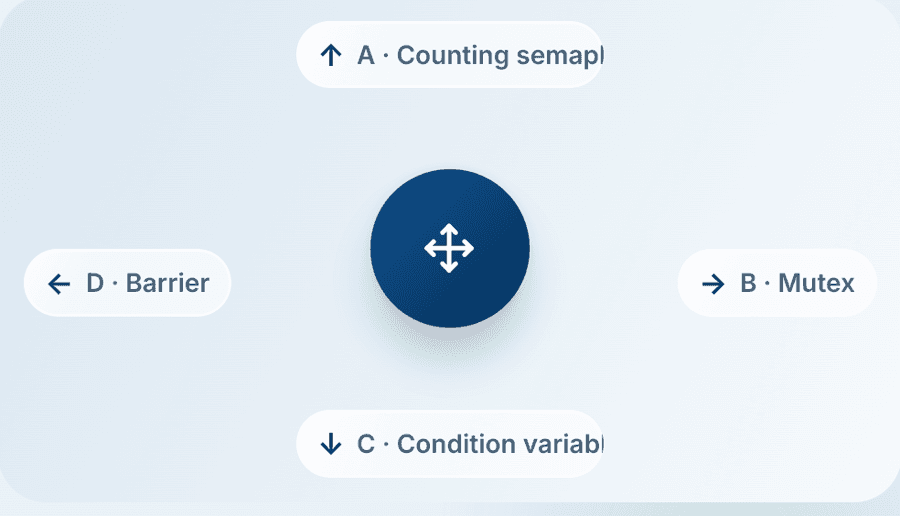
Swipe mode
Or answer it without looking
Swipe mode maps each option to a direction and puts a puck in the middle. Drag it toward the answer and let go. Same question, same scoring, answerable with one thumb.
It is a toggle at the top of the question, so you can switch back to tapping at any point.
Practice sets by stack and difficulty
Filter down to the stack you are actually being interviewed on, at the level you are actually at, and work through a set instead of picking questions one at a time.
A seven day strip
The last week, filled in or not. Short enough to be honest, and short enough to recover from.
The app as it actually looks
Screenshots from the Android build, and nothing drawn around them. The numbers on these screens belong to one real account, which is why the streak says one rather than four hundred.
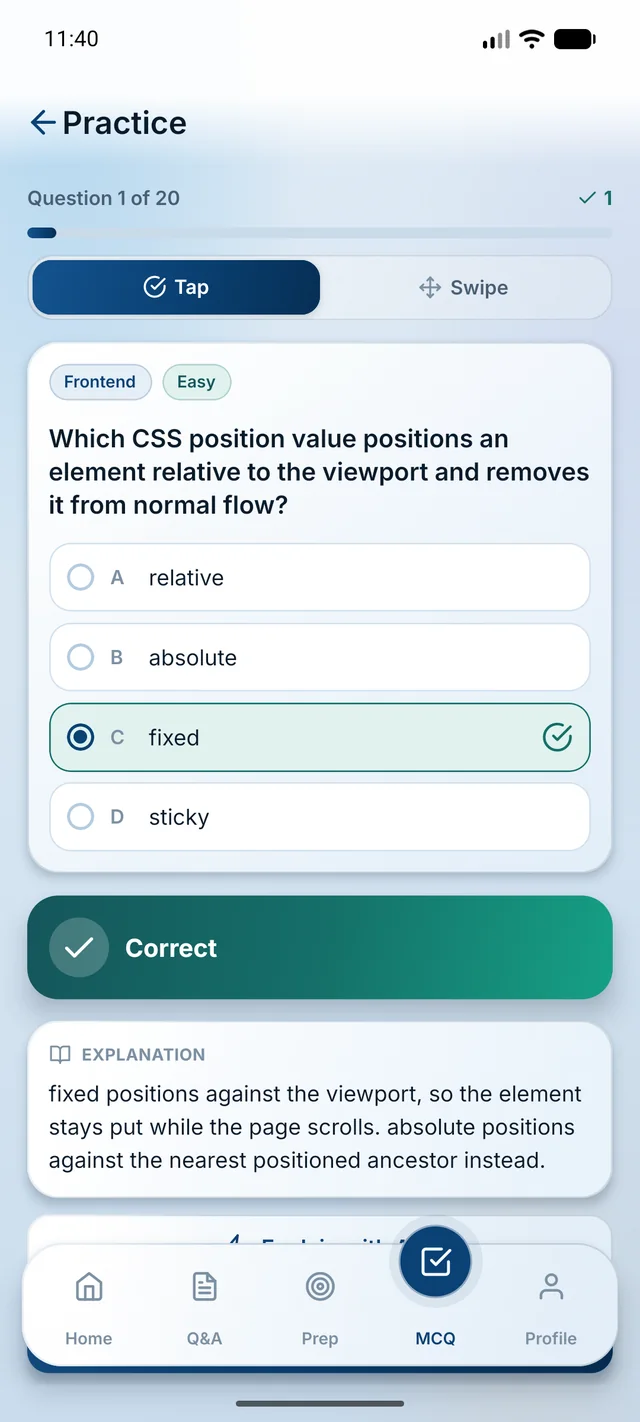
Marked, and why
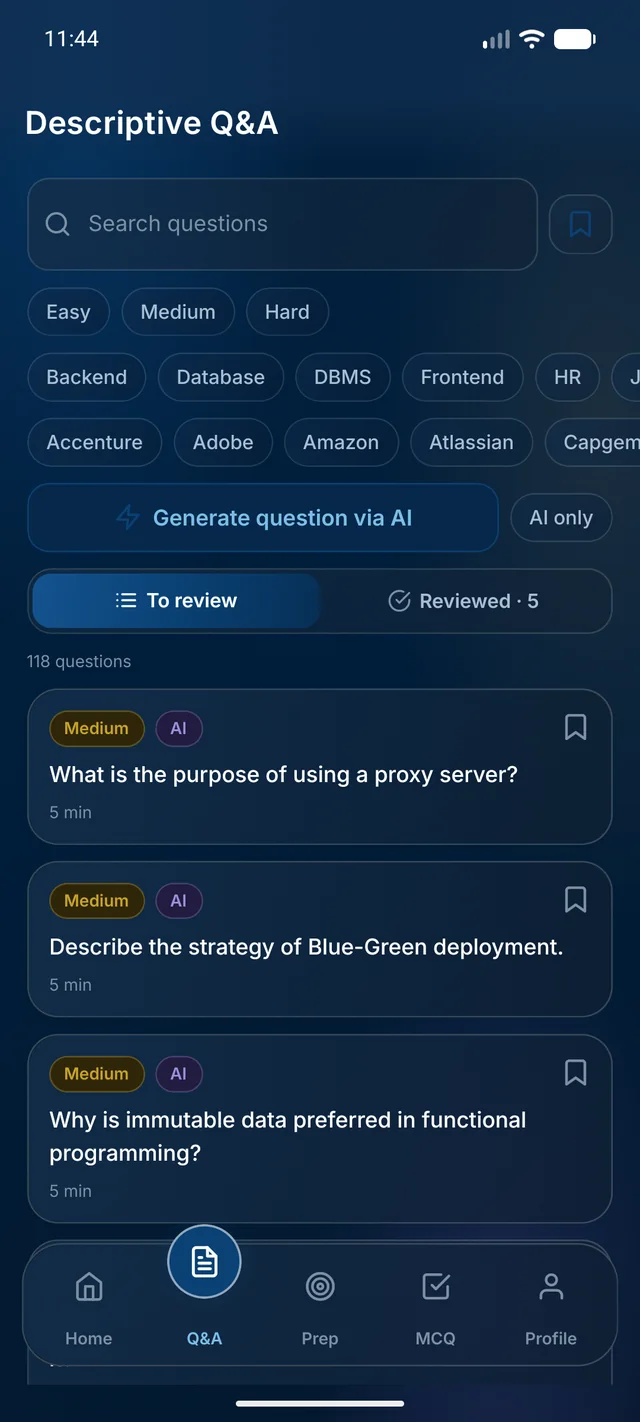
The question bank
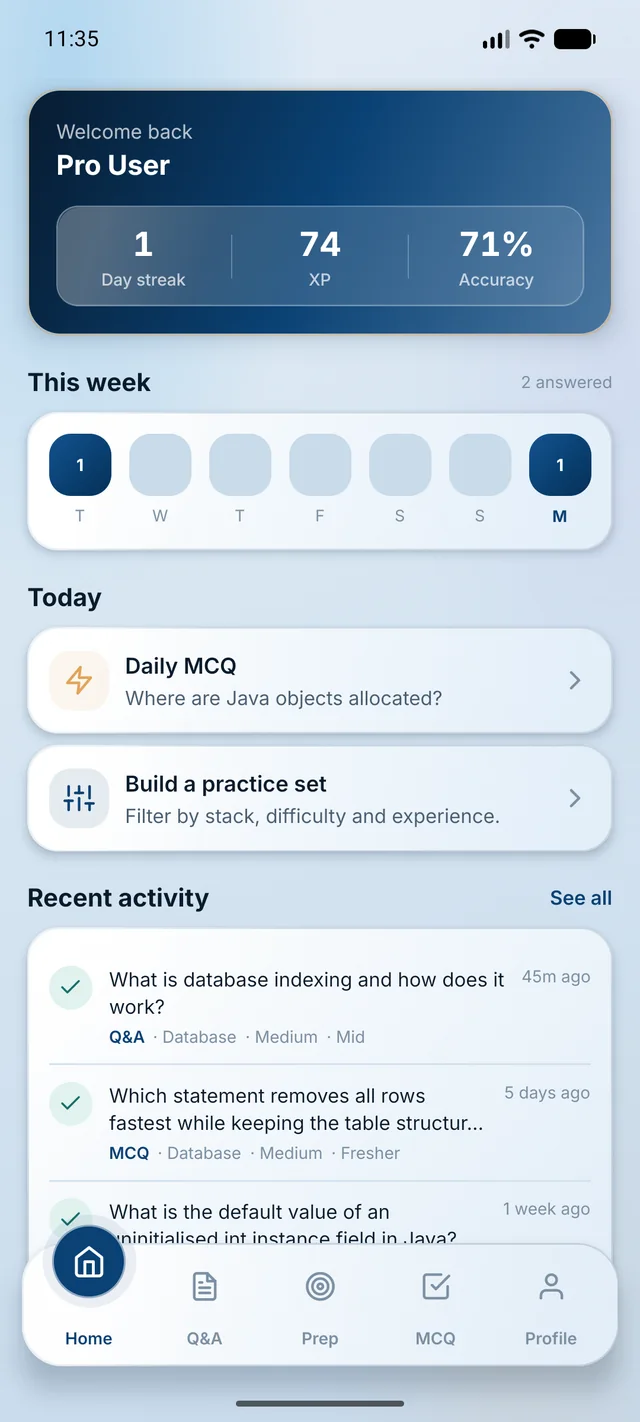
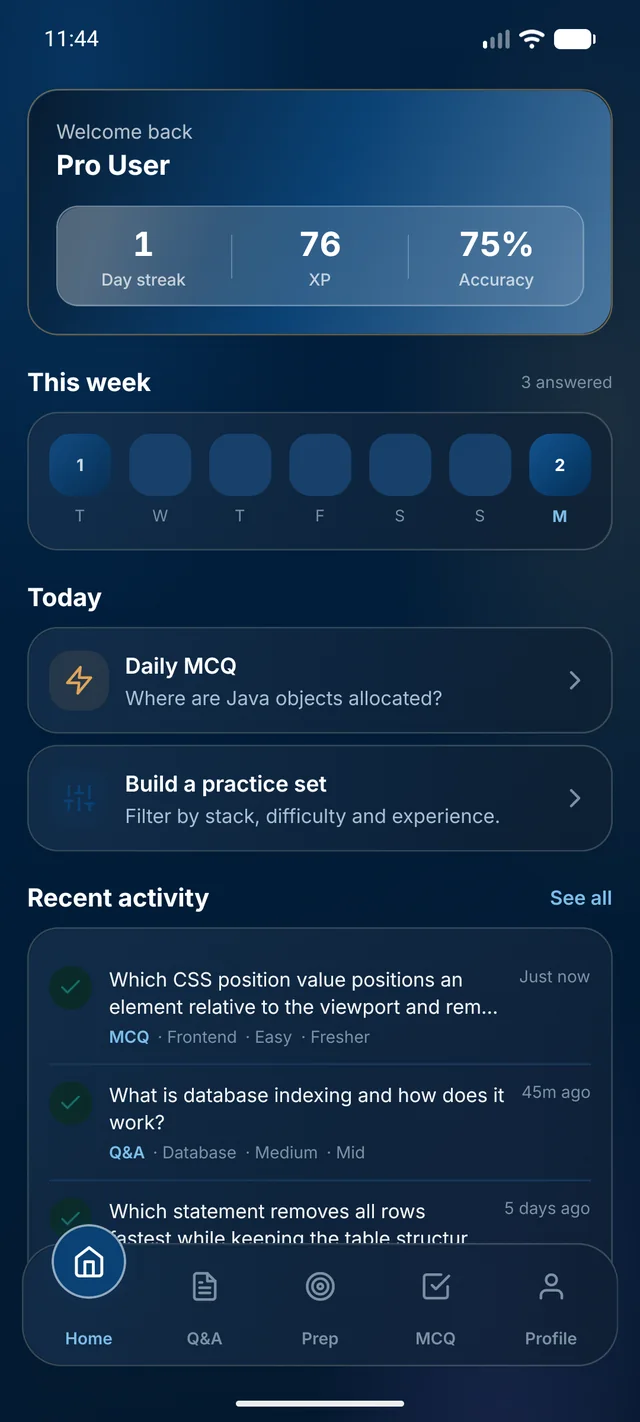
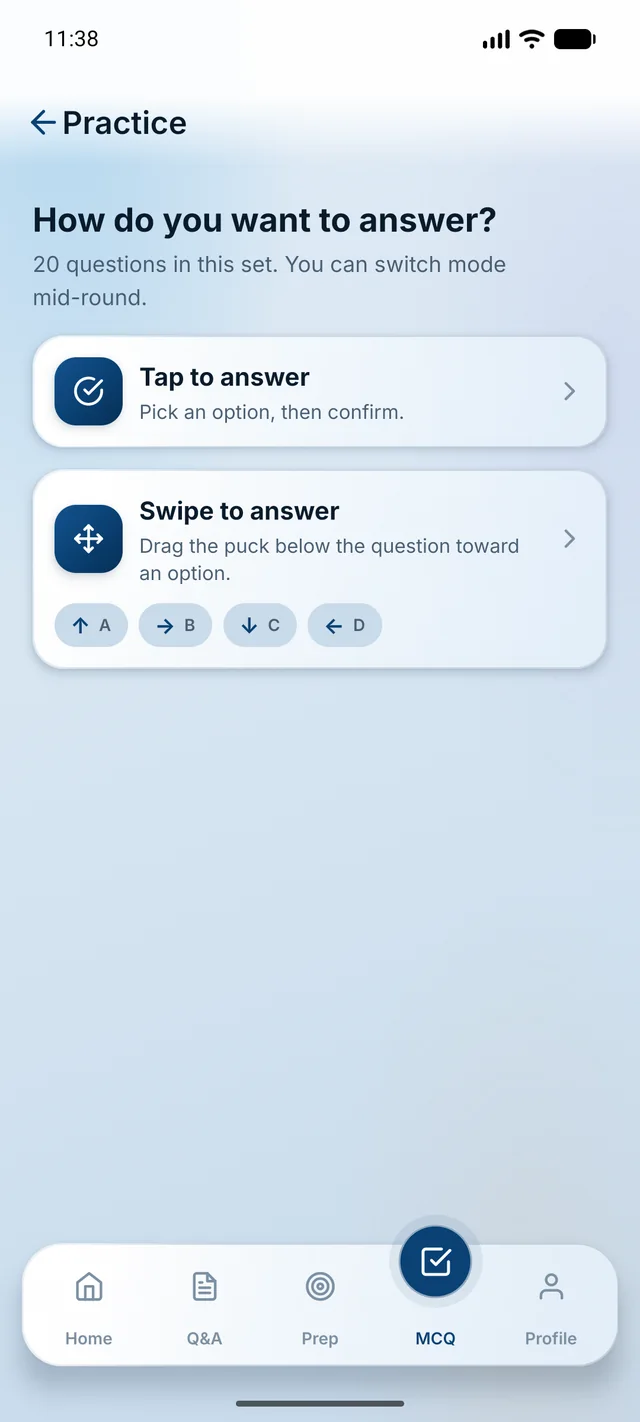
Tap or swipe
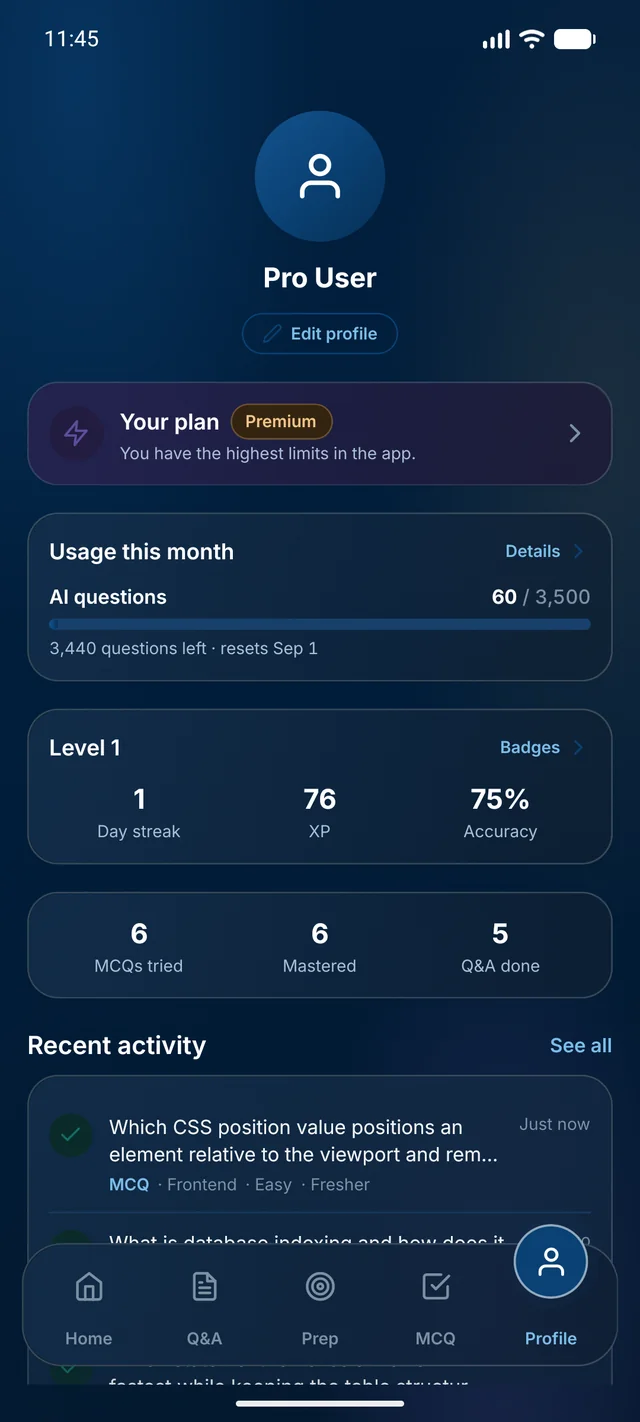
Plan and limits
Home · Appearance
Following the phone, so it changes on its own.
A bank of descriptive questions
Searchable, bookmarkable, and tagged by company and by stack — for the evening before a round when you want to read rather than write.
Q.001
Design a rate limiter that stays correct when a node drops out halfway through a window.
SystemsHardQ.002
Why does adding an index make writes slower? Be specific about what happens on insert.
DatabasesMediumQ.003
Your p99 is ten times your p50 and CPU is flat. Where do you look, and in what order?
DebuggingHardQ.004
When would you put a queue between two services, and what guarantee do you give up by doing it?
SystemsMediumQ.005
Walk through everything between a typed URL and the first byte painted on screen.
NetworkingMediumQ.006
Describe something you shipped that broke in production, and what the rollback actually looked like.
BehaviouralMedium
Grading is the line between free and paid
On the free plan you still write full answers and you still keep every one of them. The score is the only thing withheld.
Free
₹0
- Questions per prep set
- 15
- Prep sets per month
- 4
- AI questions per month
- 60
- Graded written answers per day
- —
- Follow-up depth
- —
Pro
₹499 / month
- Questions per prep set
- 50
- Prep sets per month
- 9
- AI questions per month
- 450
- Graded written answers per day
- 15
- Follow-up depth
- 1 level
Premium
₹999 / month
- Questions per prep set
- 100
- Prep sets per month
- 12
- AI questions per month
- 1,200
- Graded written answers per day
- 40
- Follow-up depth
- 2 levels
What it does not do
It does not tell you that you did well when you did not.
It does not reward a fluent answer that misses the key points.
It does not show you a score on the free plan, and it will not hint at one either.
It does not invent the rubric. A person wrote the key points, question by question, before you arrived.
Ask us something
Questions about how the grading works, what is in each tier, or when the Android build lands. Write and we will reply by email.
Or write directly to support.practivia@gmail.com.